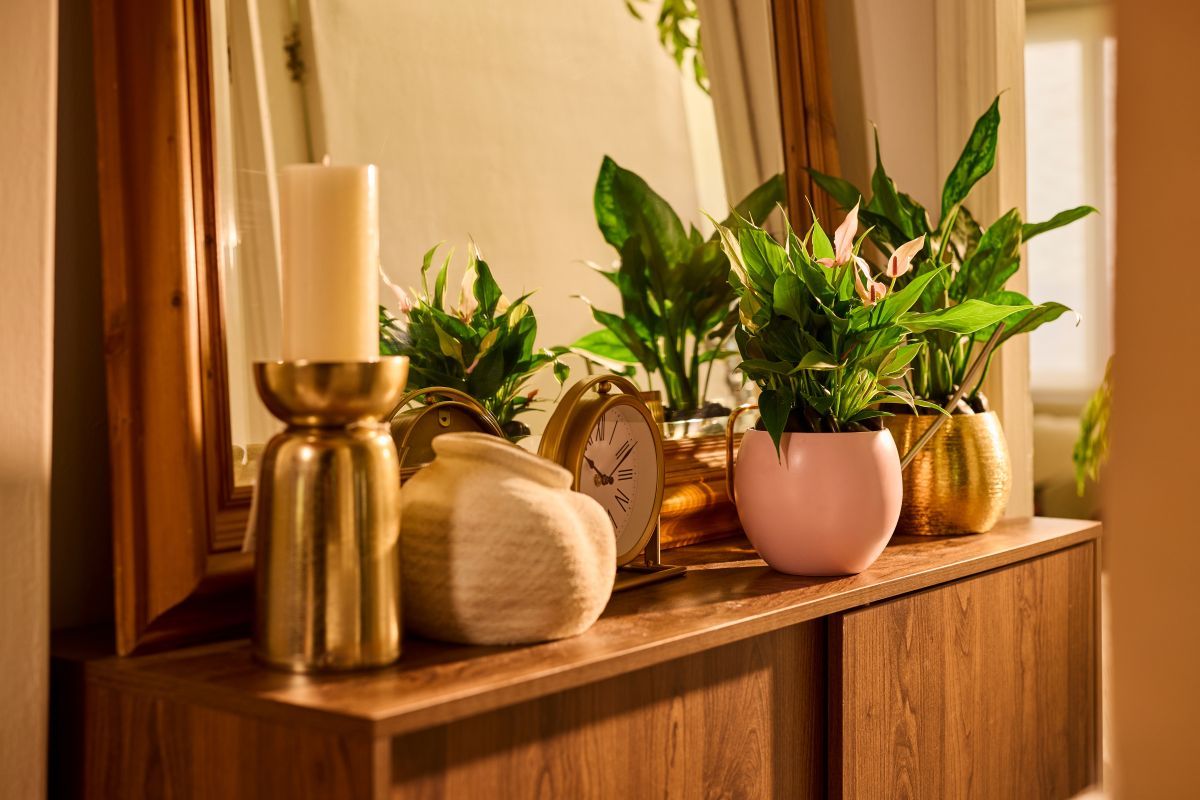
An Arabica coffee plant brings a familiar pleasure into your home in an unexpected way. With glossy leaves and gently rippled edges, it makes a lovely companion to your other houseplants, even before flowers appear. Perhaps you chose it because you love coffee, or someone surprised you with a thoughtful plant gift. Either way, learning its needs will help you enjoy the greenery and the satisfaction of seeing new leaves unfold.
What Is an Arabica Coffee Plant?
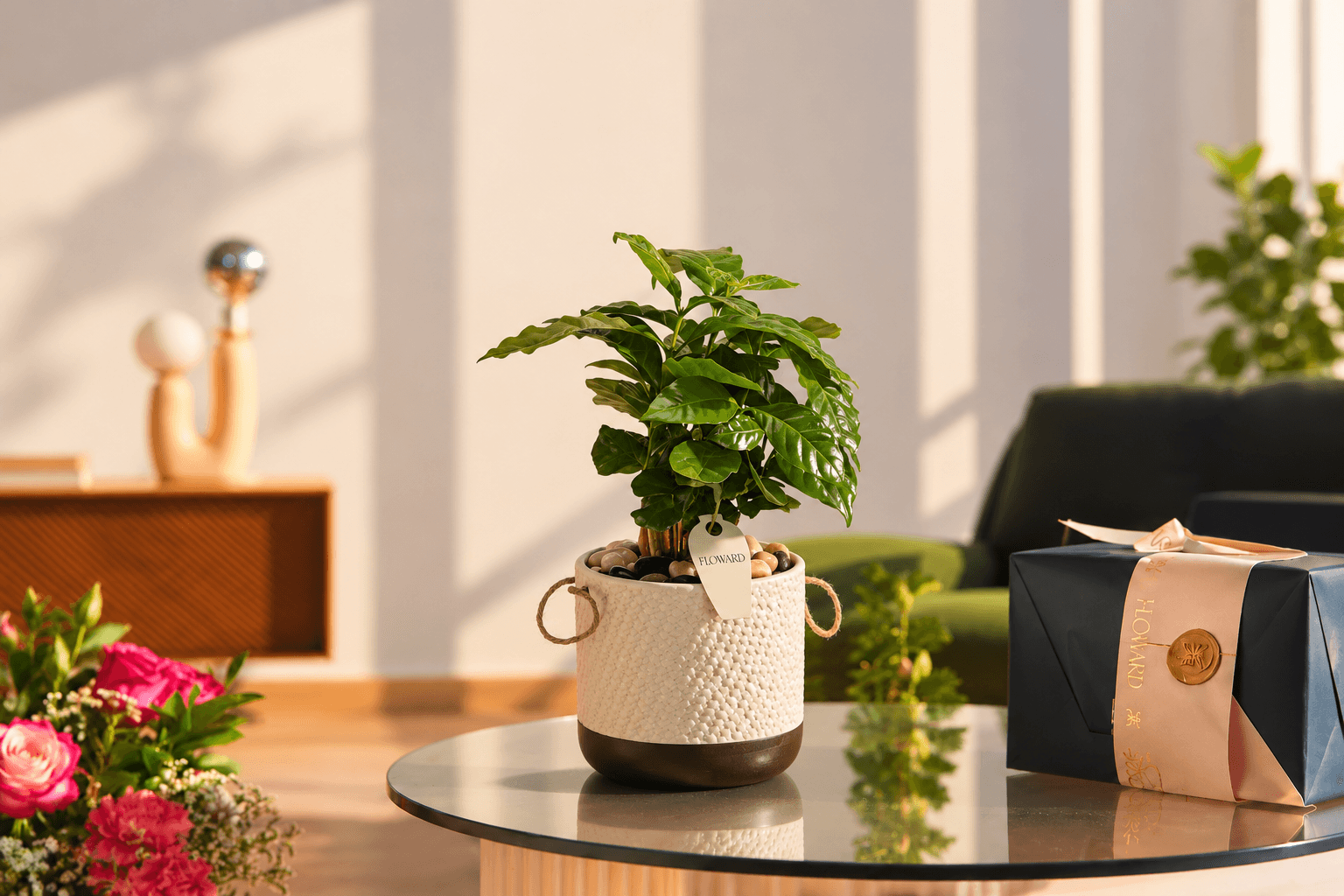
The Arabica coffee plant, botanically known as Coffea arabica, is an evergreen shrub or small tree in the Rubiaceae family. You may also see it called Arabian coffee, Arabica coffee, or simply coffee plant. Despite its name, its native range is in Africa, including southwestern Ethiopia, eastern South Sudan, and northern Kenya. This is the species grown for Arabica coffee beans, although indoors it is also enjoyed as a foliage plant.
Its leaves grow in opposite pairs along the stems, giving the plant a balanced appearance. Mature specimens can produce small, fragrant white flowers followed by fruits commonly called coffee cherries. The beans are actually seeds inside those fruits, usually two per cherry. While a coffee tree can become several meters tall in suitable outdoor conditions, a potted indoor plant stays more manageable with appropriate pruning.
Style Your Space with Elegant Plants

KWD 33
White Phalaenopsis Pot 
KWD 14
White Kalanchoe White
KWD 20
Dreamy Purple Spathiphyllum Plant
KWD 28
Duo Red Anthurium Plants
KWD 19
Anthurium Joli | Vase
KWD 19
Delightful Peace Lilies Plant
KWD 24
Well Done Sansevieria Laurentii
KWD 18
Delight White Kalanchoe Plant
KWD 18
Fiery Red Aglaonema Plant Berry Pot
KWD 23
Elegant Yellow Spathiphyllum Plant
Arabica Coffee Plant Care at a Glance
Your coffee plant needs a little regular attention, making it a rewarding choice for beginners who enjoy watching their plants grow. Use the table below to get familiar with its everyday needs.
| Care need | What to provide |
| Care level | Moderate; suitable for attentive beginners |
| Light | Bright, indirect light with protection from harsh sun |
| Water | Water when the soil surface begins to dry |
| Soil | Rich potting mix that retains moisture but drains freely |
| Temperature | Stable warmth, approximately 18–26°C |
| Humidity | Humid air, away from drying air-conditioning drafts |
| Fertilizer | Feed during active growth according to product directions |
| Container | Drainage holes and no standing water |
What Should You Do When Your Coffee Plant Arrives?
- When your coffee plant arrives, inspect its leaves, check the soil, and make sure excess water can escape.
- Remove any wrapping that blocks drainage, and empty water collected inside a decorative outer pot.
- Water only if the soil needs it, rather than assuming that delivery means the plant is thirsty.
- Give it a suitable position and time to settle before repotting or fertilizing unnecessarily.
Is an Arabica Coffee Plant Safe for Pets and Humans?
An Arabica coffee plant should not be treated as a pet-safe plant or an edible decoration. Coffee beans contain caffeine, which can cause serious poisoning in cats and dogs. Keep the plant and any fallen seeds or fruit beyond their reach. If your pet eats part of it, contact your veterinarian promptly and provide the botanical name, Coffea arabica, to help identify the plant accurately.
For people, growing the plant indoors is different from consuming it. Keep it away from young children who may taste leaves or berries, and do not assume that a nursery-grown ornamental plant is suitable for food preparation. Excess caffeine can be harmful, and familiar coffee beans are not harmless in every amount. Contact a healthcare professional if a child swallows part of the plant.
Where Should You Place a Coffee Plant Indoors?
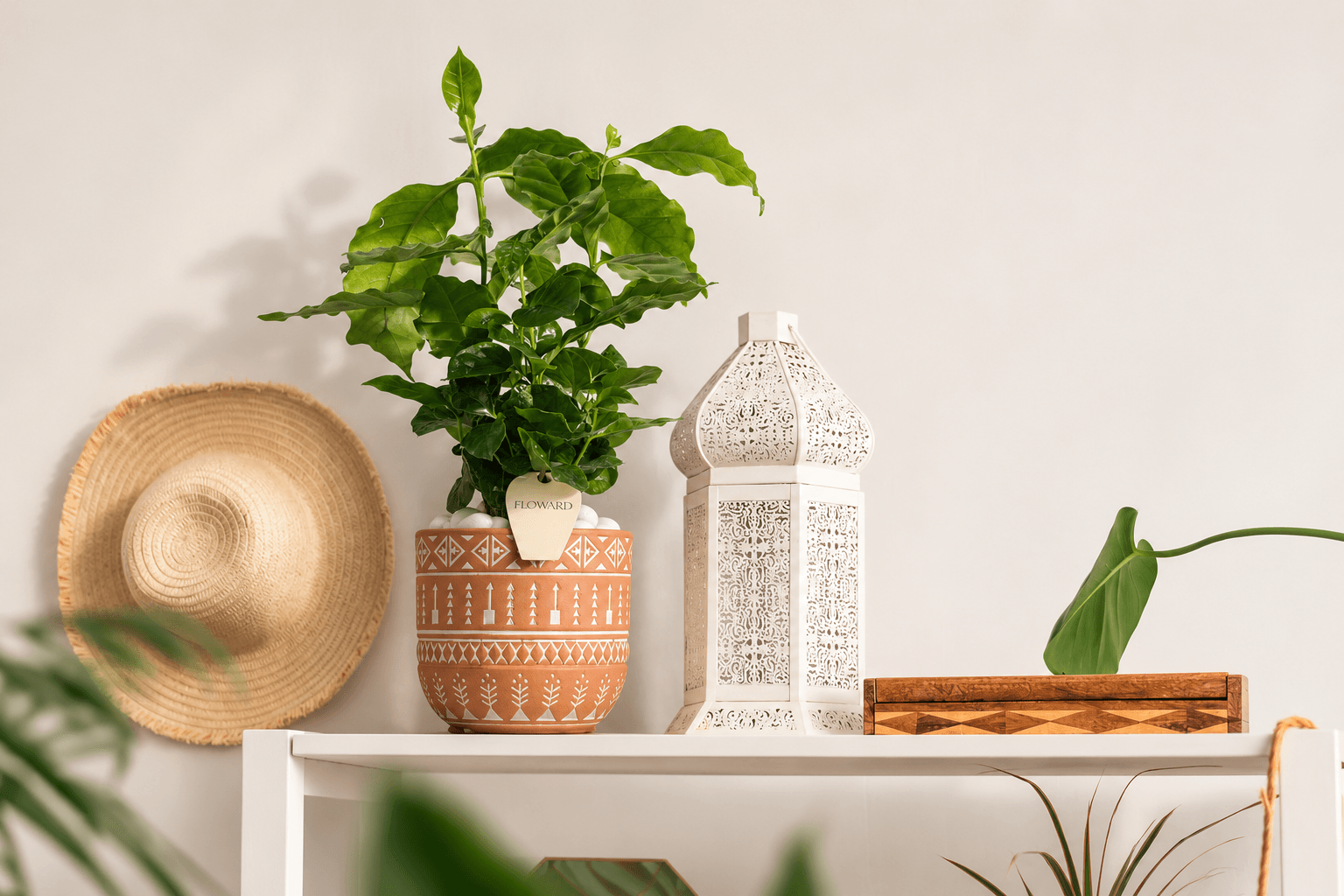
Place your coffee plant near a bright window where strong sunlight will not fall directly on its leaves for prolonged periods. An east-facing window can be a useful option, while a sheer curtain helps soften stronger exposure. When arranging it alongside your other indoor plants, choose a position that meets its lighting needs rather than simply filling an empty corner. Too little light can lead to slow, stretched growth, whereas excessive sun can scorch the foliage.
How Often Should You Water a Coffee Plant?
Water your coffee plant when the surface of the growing mix begins to dry, while some moisture remains below. Check with your finger instead of following a fixed weekly schedule. Water thoroughly, let the excess drain away, and empty the saucer or outer pot. The aim is evenly moist soil, with neither prolonged saturation nor a completely dried-out root ball.
Check the pot more often in warm, bright conditions and less often when the mix dries slowly. Lower light and cooler rooms commonly reduce water use, so winter watering may need to decrease. However, a warm indoor room can behave differently from the weather outside. Let the condition of the soil guide you rather than the season alone.
What Temperature and Humidity Does It Need?
Your Arabian coffee plant appreciates stable warmth and humid air, particularly in homes with frequent air conditioning. Keep it away from cold outlets, heaters, and sudden drafts rather than repeatedly moving it between rooms. A room humidifier can help when the air is persistently dry. Remember that increasing soil moisture does not replace humidity around the leaves, so avoid extra watering as a remedy for dry air.
What Soil and Fertilizer Should You Use?
Use a rich, freely draining potting mix that holds moisture without becoming dense and soggy. Coffea arabica suits acidic to neutral soil, so strongly acidifying the mix is unnecessary. Feed during active growth with a suitable liquid houseplant fertilizer, following the label’s dilution and frequency. Reduce feeding when growth slows, and investigate unhealthy roots or watering problems before adding fertilizer to a struggling plant.
Avoid adding layers of used coffee grounds simply because this is a coffee plant. They do not reliably make soil more acidic, and thick layers can interfere with air and water movement. Remaining caffeine can also inhibit plant growth. Composting the grounds separately is a better approach than routinely applying them to an indoor pot.
Style Your Space with Elegant Plants
KWD 33
White Phalaenopsis Pot KWD 14
White Kalanchoe WhiteKWD 20
Dreamy Purple Spathiphyllum PlantKWD 28
Duo Red Anthurium PlantsKWD 19
Anthurium Joli | VaseKWD 19
Delightful Peace Lilies PlantKWD 24
Well Done Sansevieria LaurentiiKWD 18
Delight White Kalanchoe PlantKWD 18
Fiery Red Aglaonema Plant Berry PotKWD 23
Elegant Yellow Spathiphyllum Plant
When Should You Repot and Prune a Coffee Plant?
Repot your coffee plant when its roots have filled the container, usually every two to three years rather than automatically each spring. Move it into the next pot size up, using fresh growing mix and a container with drainage holes. Spring is also a suitable time for light pruning to manage its shape. Cut just above a leaf joint, and avoid heavy pruning of a plant already struggling with poor conditions.
What’s Wrong With Your Coffee Plant?
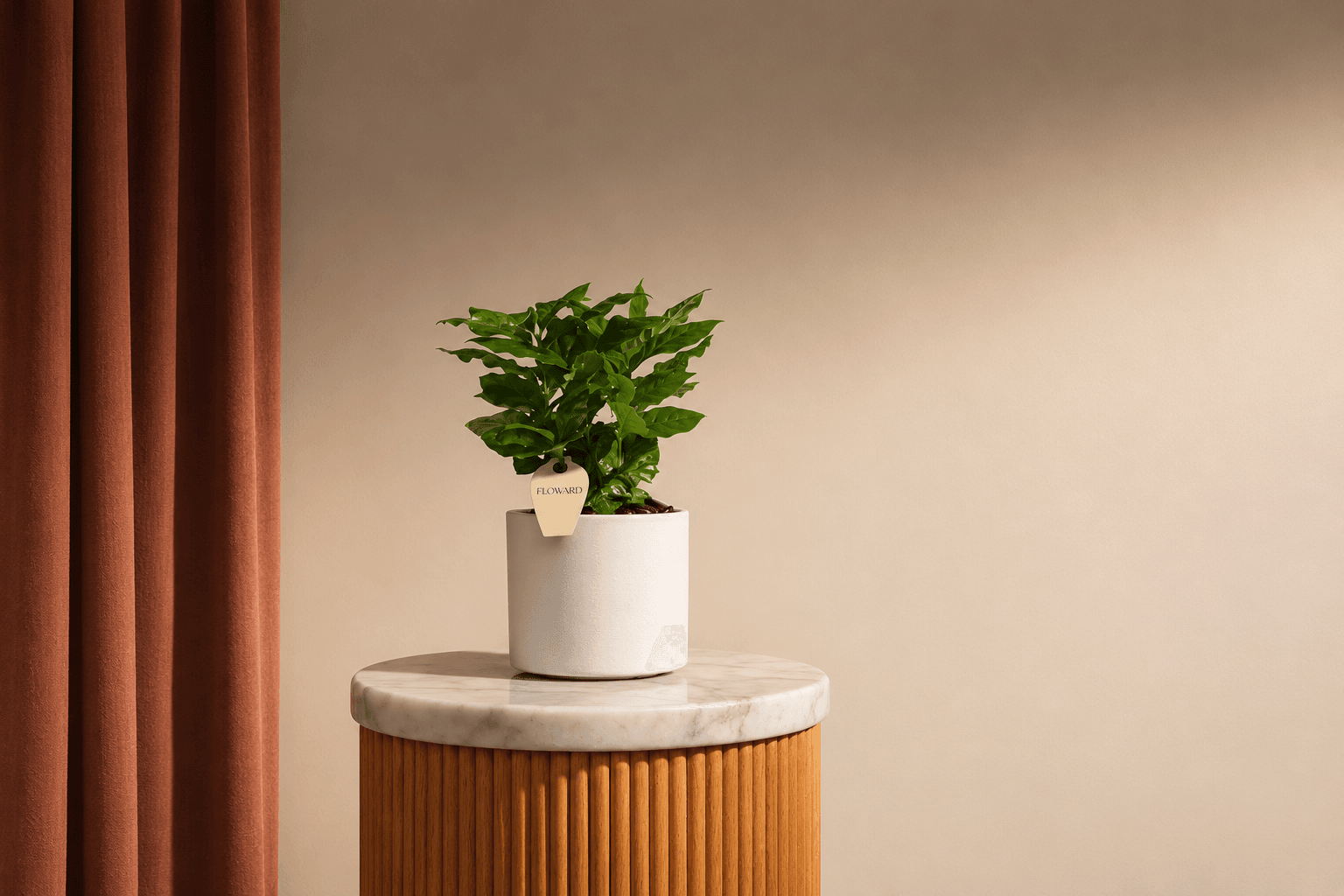
Leaf changes can have several causes, so check the soil and growing conditions before choosing a solution. Inspect beneath the leaves and along the stems as well as the visible upper surfaces. Recent moves, changes in watering, or stronger sunlight can provide useful clues. This table helps you decide what to investigate first.
| Problem | Possible causes | What to check and do |
| Yellow leaves: | Overwatering, poor drainage, or nutrient problems | Check whether the mix stays wet. Correct drainage and watering before considering additional feeding. |
| Brown, crispy tips or edges : | Dry air, inconsistent watering, or excess fertilizer salts | Check humidity, soil dryness, and fertilizer use. Improve conditions without keeping roots constantly wet. |
| Pale or scorched patches: | Harsh direct sunlight | Observe when sunlight reaches the plant. Filter strong exposure or choose a more sheltered position. |
| Drooping leaves: | Dry soil or root stress in overly wet soil | Check below the surface. Water if dry; investigate drainage if the mix is already wet. |
| Leaf drop: | Cold drafts, environmental changes, watering stress, or pests | Review recent changes and inspect the foliage. Stabilize conditions and address the identified cause. |
| Fine webbing, speckling, cottony clusters, or raised bumps: | Mites, mealybugs, or scale insects | Separate the plant from others and identify the pest before choosing an appropriate treatment. |
Coffee plants can attract mites, scale insects, and mealybugs; unsuitable light and moisture can also damage their leaves. Avoid assuming every brown tip means underwatering or every yellow leaf requires fertilizer.
Style Your Space with Elegant Plants
KWD 33
White Phalaenopsis Pot KWD 14
White Kalanchoe WhiteKWD 20
Dreamy Purple Spathiphyllum PlantKWD 28
Duo Red Anthurium PlantsKWD 19
Anthurium Joli | VaseKWD 19
Delightful Peace Lilies PlantKWD 24
Well Done Sansevieria LaurentiiKWD 18
Delight White Kalanchoe PlantKWD 18
Fiery Red Aglaonema Plant Berry PotKWD 23
Elegant Yellow Spathiphyllum Plant
Will an Indoor Coffee Plant Flower and Produce Beans?
An indoor Arabica coffee plant can flower and fruit, although neither is guaranteed. Flowering may begin around three to four years of age under suitable conditions, with cherries taking several months to ripen afterward. A young plant’s lack of flowers is therefore not necessarily a care problem. Enjoy its foliage first, and treat any future harvest as a welcome bonus rather than a dependable supply of coffee.
Can You Grow a Coffee Plant From Seed?
You can grow a coffee plant from suitable fresh seed, but roasted kitchen coffee beans will not germinate. Buy seed intended for planting and provide consistent warmth and moist growing mix. Germination can take several weeks, so patience matters from the beginning. If you are new to indoor gardening, an established young plant offers a simpler way to learn its care routine.
Caring for an Arabica coffee plant becomes easier as you learn how it responds to your home. Give it a bright spot and steady care, and enjoy the small pleasure of each new leaf, with flowers as a possible reward in time. If you love greenery with a story, an Arabica coffee plant is a lovely place to start. It also belongs among elegant gifts for a coffee lover who would enjoy nurturing something of their own.