When searching for the perfect diamond wedding ring, many wonder: which diamond is best for a wedding ring? The truth lies in understanding the 4Cs of diamonds. This internationally recognised system is the ultimate diamond wedding ring guide, helping couples make confident and informed decisions. Each “C” affects one aspect of the diamond's shape and appearance and balancing them ensures your choice reflects both your style and your budget. Explore how the 4Cs work together to reveal the diamond that captures your love story.
Discover with Floward
Premium Jewelry & Accessories

OMR 91
Hugo Boss Contender Brown Men's Watch
OMR 110
Miss L' by L'azurde Kids Flower Colored Stones Necklace
OMR 140
Miss L By L'azurde Flowers Gold Necklace 
OMR 124
Miss L' Gold Necklace | Letter M
OMR 86
Calvin Klein Gold Twisted Bezel Women's Watch
OMR 215
Tous Mini Ivette Gold Necklace For Women
OMR 449
Kooheji Jewellery Square Diamond Women's Necklace 
OMR 216
Tous Gold Bear Earrings 
OMR 82
Miss L by L'azurde Kids Flower Pearl Necklace
OMR 328
Kooheji Jewellery Diamond Oval Bracelet
What Are The 4Cs of Diamonds?
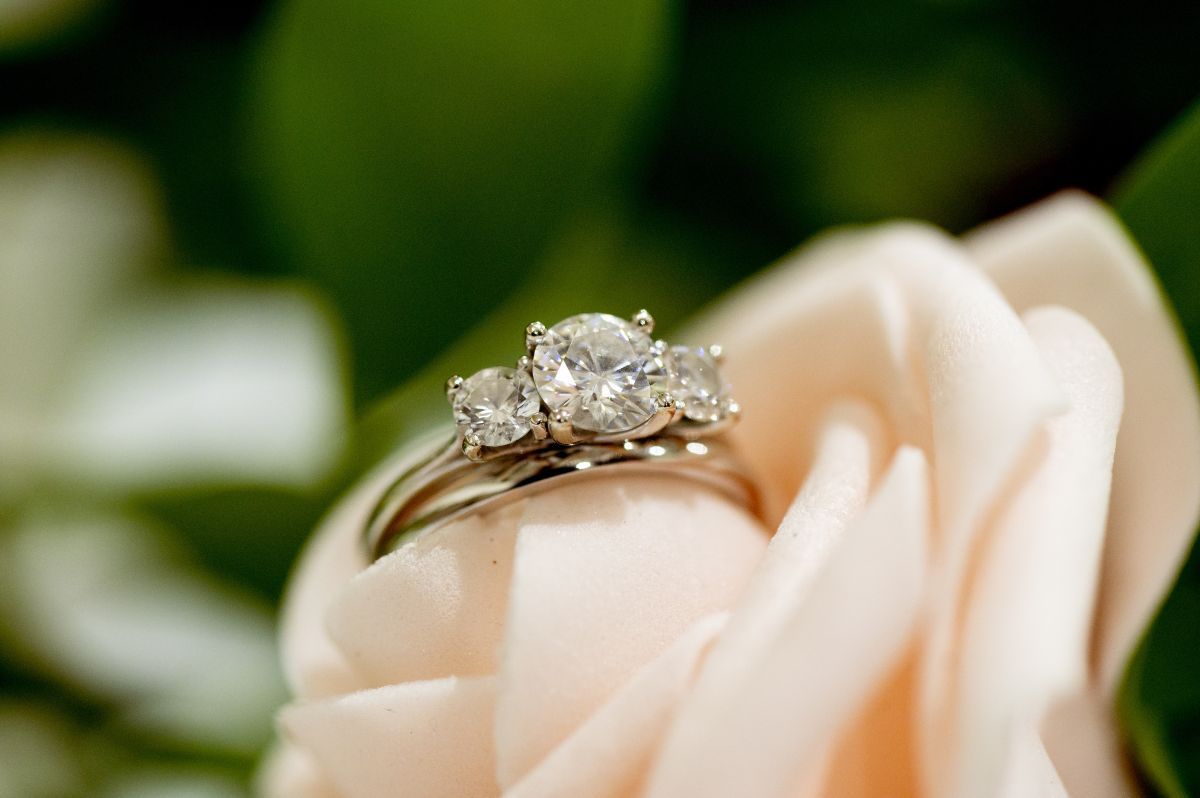
The 4Cs stand for Cut, Carat, Clarity, and Colour, which together form the global standard for grading diamonds. Each “C” highlights a different aspect of the stone, from its sparkle and brilliance to its size, purity, and tone. Understanding these four factors allows you to compare diamonds fairly, balance beauty with budget, and choose a diamond wedding ring that truly reflects your style and love story.
Diamond Cut
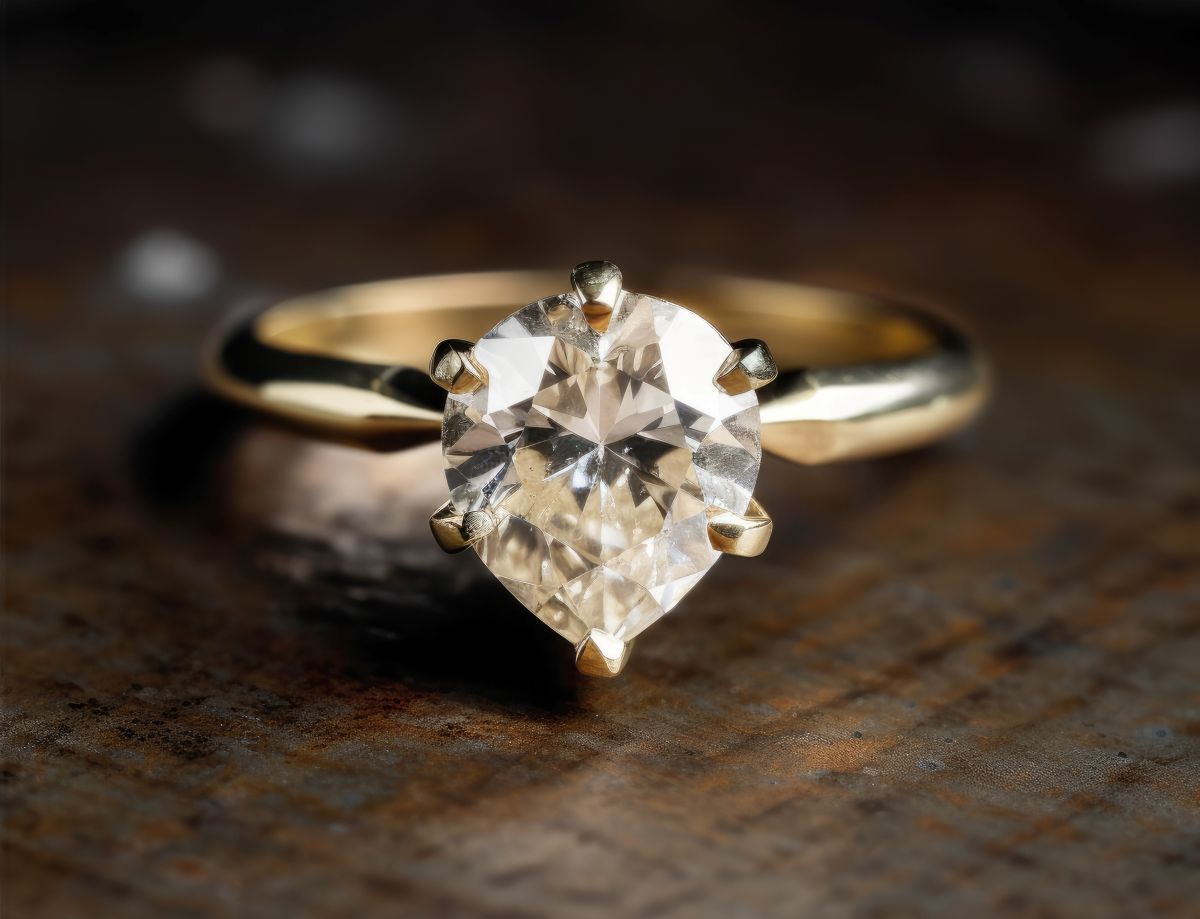
Why is diamond cut so important? Cut determines how well a diamond reflects light, which influences its brilliance, fire, and scintillation. Even with perfect clarity and carat, a poorly cut diamond will look dull. That’s why experts recommend prioritising cut above all else when choosing a wedding ring.
Diamond Cut Grades
When it comes to the sparkle of your diamond, the cut grade plays a decisive role. It evaluates how well the facets are proportioned and polished, directly influencing brilliance, fire, and overall beauty. Choosing the right grade ensures your diamond wedding ring has lasting radiance.
Diamond cut grades include:
- Excellent: Maximum brilliance, fire, and scintillation; the most desirable cut.
- Very Good: High sparkle, slightly less precise than excellent.
- Good: Adequate light reflection but less lively.
- Fair: Noticeably reduced brilliance; budget-friendly but lacks sparkle.
- Poor: Minimal sparkle; light leaks through the bottom of the stone.
Diamond Cut Shapes
Beyond the technical cut grade, the shape of a diamond defines its personality and style. Different shapes highlight unique features, from timeless brilliance to modern sophistication, making the choice highly personal.
Popular diamond shapes include:
- Round Brilliant: The most classic and sparkly, perfect for timeless elegance.
- Princess Cut: Square shape with sharp angles, ideal for modern brides.
- Oval: Elongates the finger with soft curves and graceful symmetry.
- Marquise: Striking and dramatic, offering a larger appearance per carat.
- Cushion Cut: Vintage-inspired with rounded edges and soft sparkle.
- Emerald Cut: Elegant and refined, with step-cut facets showcasing clarity.
Diamond Carat
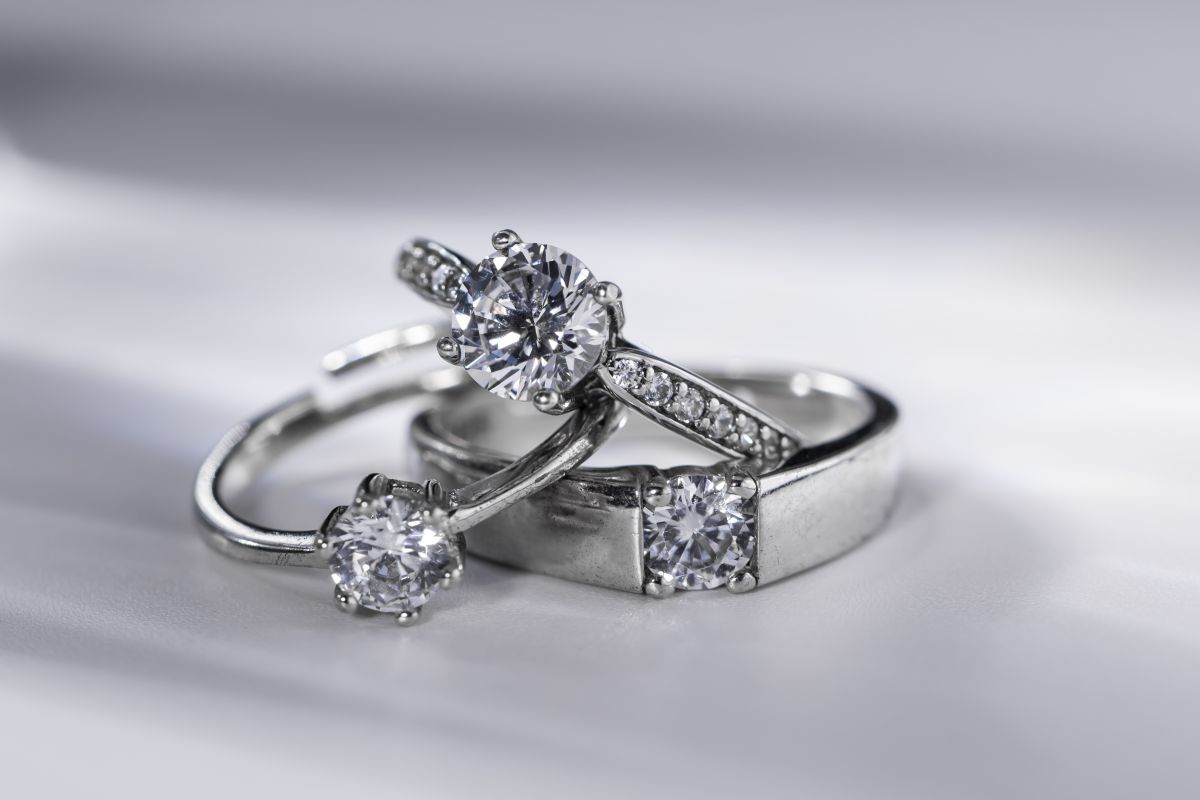
Is carat or clarity more important when choosing a diamond wedding ring? Carat is often mistaken for size, but it actually measures weight. While larger carats tend to be more valuable, other factors such as cut and depth can make smaller diamonds appear just as striking. Couples should balance carat size with budget and personal style.
Diamond Clarity
How do I choose a diamond based on cut and clarity? Clarity measures the presence of natural inclusions or blemishes formed inside the stone. While flawless diamonds are extremely rare, many inclusions are invisible to the naked eye, making mid-range grades both beautiful and practical. Striking the right balance ensures your ring sparkles without overspending.
Diamond Clarity Grades
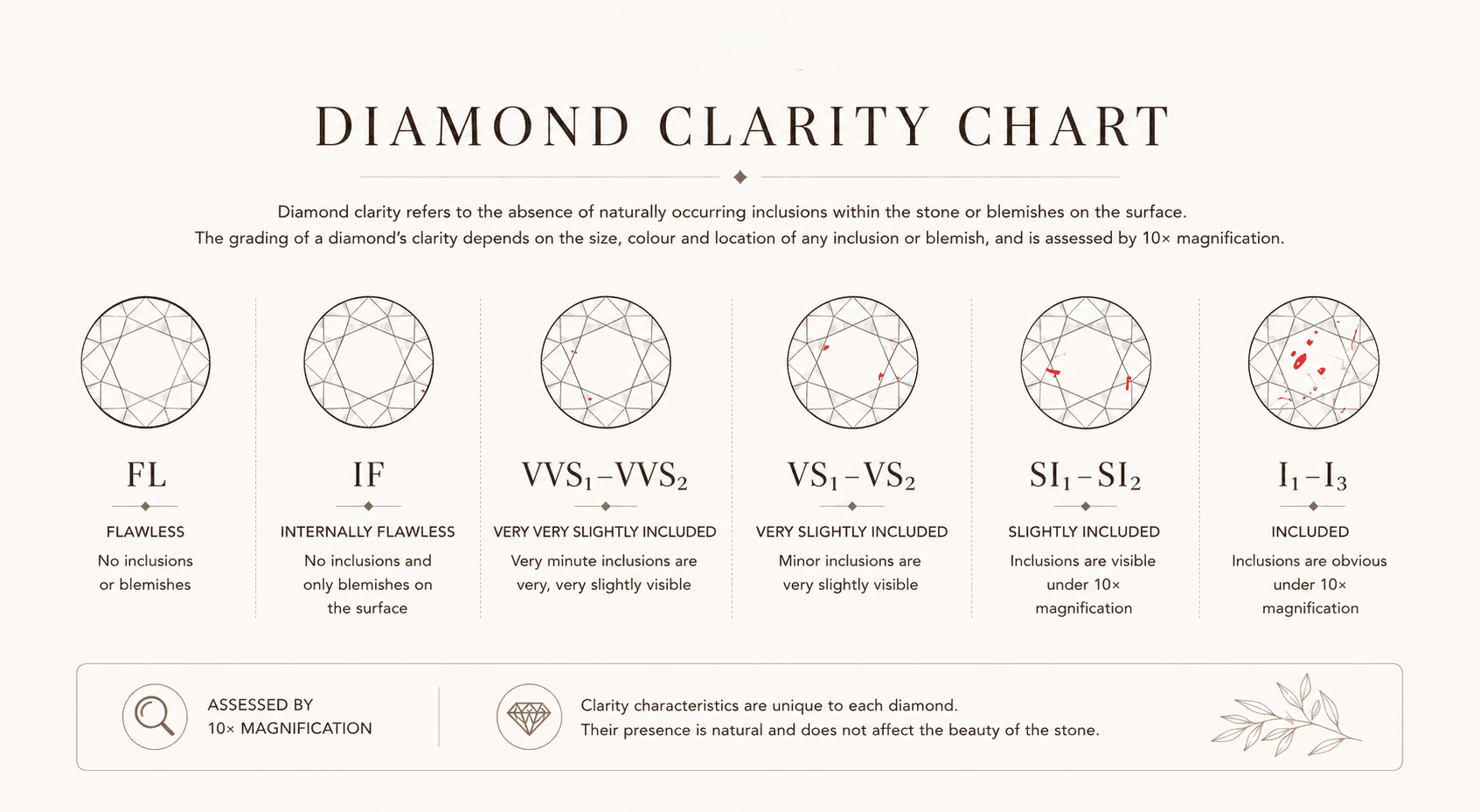
Clarity grades reveal how pure a diamond is by measuring internal inclusions and external blemishes. While flawless stones are rare and highly valuable, many mid-range grades appear just as beautiful to the naked eye. Understanding these grades helps you choose a diamond that balances beauty, rarity, and budget.
Diamond clarity grades include:
- FL (Flawless): No inclusions visible under 10x magnification.
- IF (Internally Flawless): Only minor surface blemishes.
- VVS1/VVS2 (Very, Very Slight): Inclusions so tiny they are almost impossible to detect.
- VS1/VS2 (Very Slight): Small inclusions invisible to the naked eye.
- SI1/SI2 (Slightly Included): Some inclusions visible without magnification.
Diamond Colour
What is the most popular diamond colour for engagement rings? Diamond colour grading runs from D (colourless) to Z (light yellow or brown). While completely colourless stones are most valuable, near-colourless options offer excellent value and still look stunning once set. The right colour depends on both preference and the type of metal used for the ring.
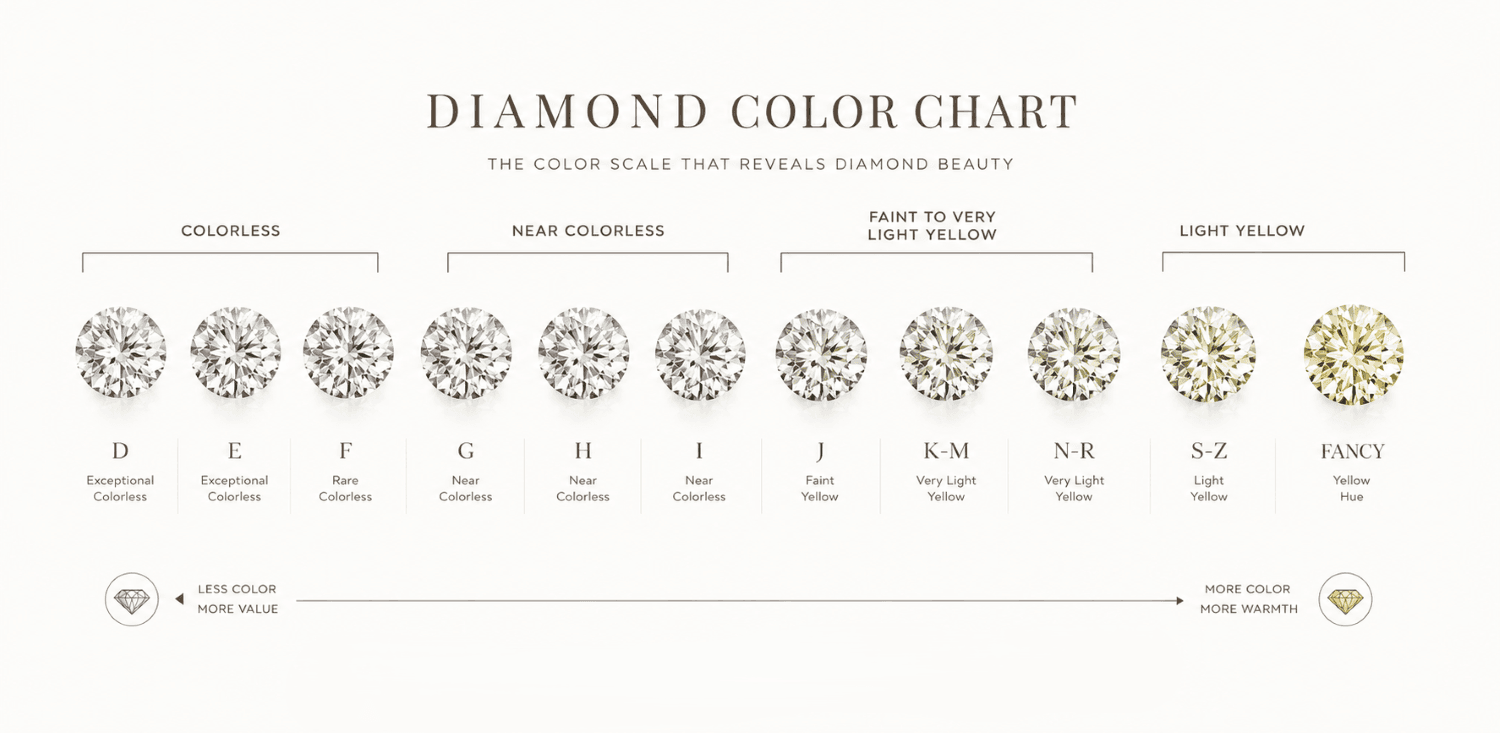
Diamond colour grades
- D–F (Colourless): Completely colourless, offering icy white brilliance and maximum value.
- G–J (Near Colourless): Excellent balance of beauty and price, with minimal warmth that is almost invisible.
- K–M (Faint Colour): Noticeable warmth, ideal for pairing with yellow-gold or vintage-style settings.
Premium Jewelry & Accessories
OMR 91
Hugo Boss Contender Brown Men's WatchOMR 110
Miss L' by L'azurde Kids Flower Colored Stones NecklaceOMR 140
Miss L By L'azurde Flowers Gold Necklace OMR 124
Miss L' Gold Necklace | Letter MOMR 86
Calvin Klein Gold Twisted Bezel Women's WatchOMR 215
Tous Mini Ivette Gold Necklace For WomenOMR 449
Kooheji Jewellery Square Diamond Women's Necklace OMR 216
Tous Gold Bear Earrings OMR 82
Miss L by L'azurde Kids Flower Pearl NecklaceOMR 328
Kooheji Jewellery Diamond Oval Bracelet
So, how do you choose a diamond wedding ring that feels perfect? The answer lies in balancing all 4Cs together rather than focusing on one alone. Prioritise cut for maximum sparkle, balance carat weight with budget, choose clarity that looks flawless to the eye, and match diamond colour with the metal of your ring. This holistic approach ensures your ring captures brilliance, value, and personal meaning.