With its glossy green leaves and brilliant crown of color, the Guzmania plant can bring the warmth of a tropical garden into even the smallest room. This distinctive houseplant looks exotic, yet its needs are surprisingly manageable once you understand how it grows. Unlike many indoor plants, it collects water through a cup formed by its leaves. This Guzmania plant guide covers its origins, symbolism, benefits, and essential indoor care in simple terms.
What Is a Guzmania Plant?
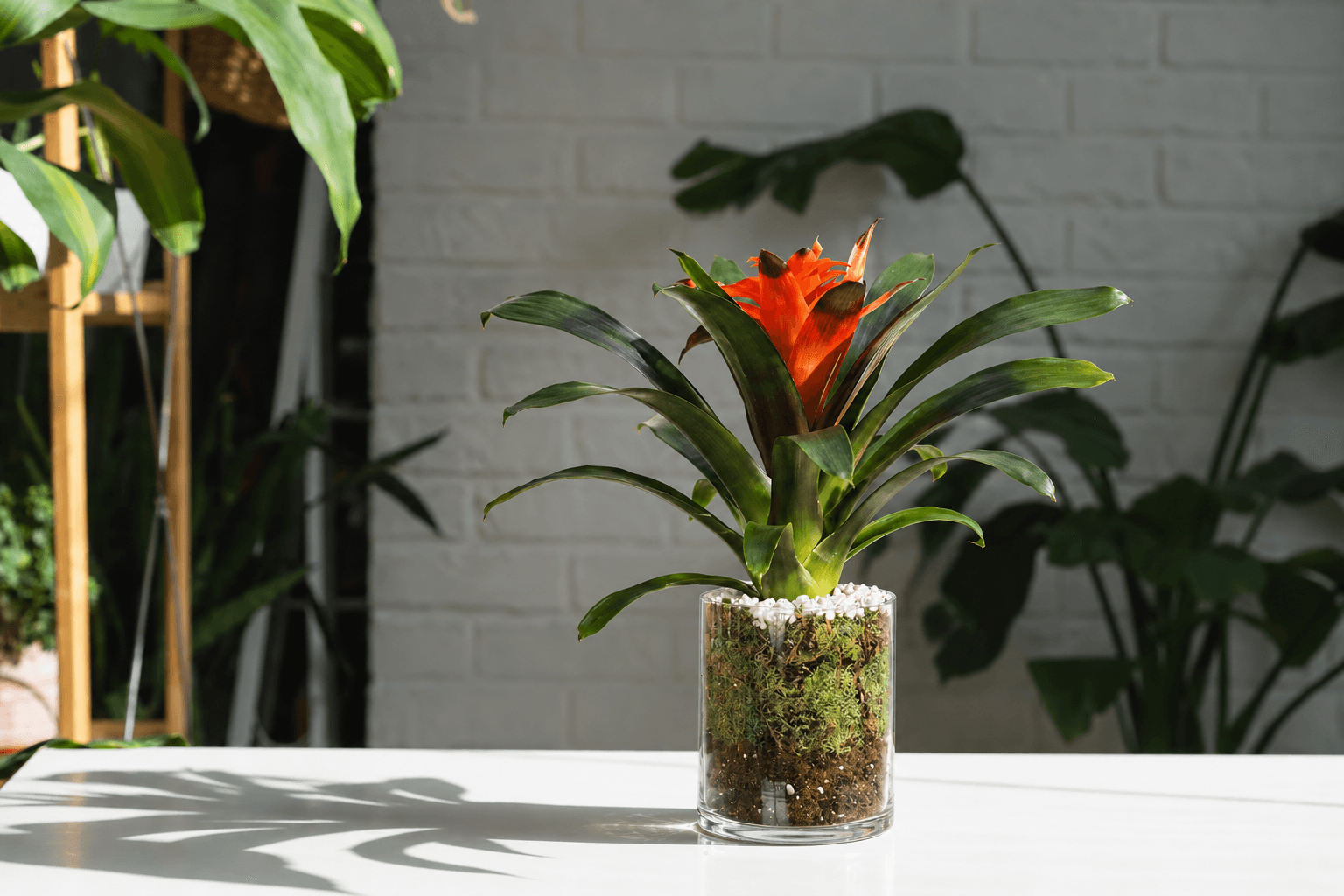
Guzmania is a genus of tropical evergreen plants belonging to the bromeliad family, which also includes the pineapple. Most species are native to warm, humid regions of Central and South America, where they often grow on tree branches rather than in soil. These plants are called epiphytes, but they are not parasites because they use trees only for support. Their leaves overlap in a circular pattern, forming a natural cup that collects rainwater.
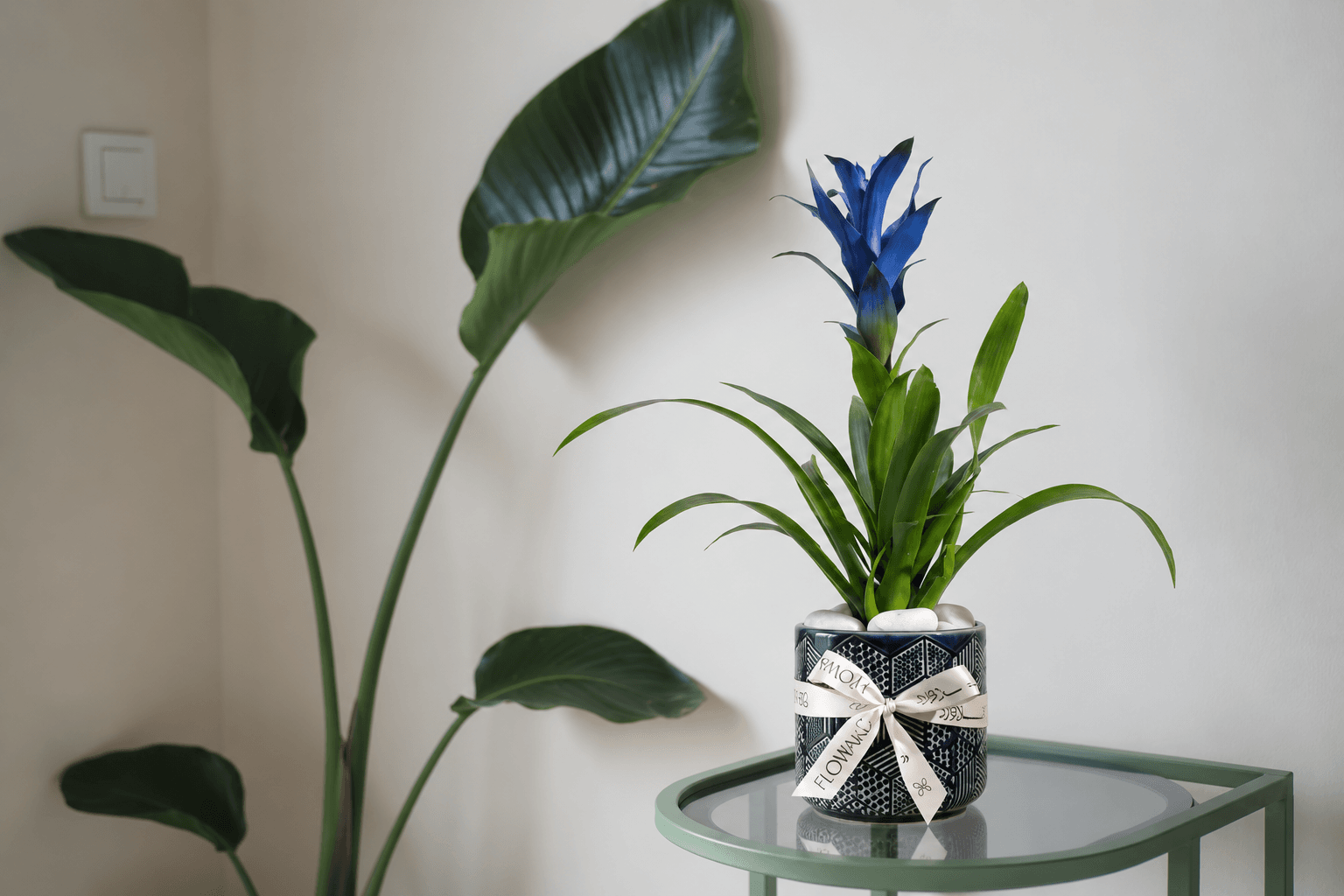
One of the most popular indoor varieties is Guzmania lingulata, commonly known as the scarlet star. It usually has long green leaves surrounding a vivid red, orange, yellow, or pink center. Its compact shape makes it easy to display on a table, desk, shelf, or plant stand. Although it has a tropical appearance, you do not need advanced gardening experience to keep it looking healthy indoors.
Style Your Space with Elegant Plants

SAR 350
Yellow Orchid Plant | Ceramic Pot
SAR 915
Music Home 3 Classes for 45 Minutes Voucher | Elegant Spathiphyllum Plant
SAR 289
Pure Areca Palm Plant
SAR 265
Elegant Aglaonema Maria Plant
SAR 215
Delightful Peace Lilies Plant
SAR 235
Anthurium Joli | Vase
SAR 575
Anthurium lilli Pink
SAR 180
Scarlet Red Anthurium Aristo Plant
SAR 230
Sunlit Yellow Phalaenopsis Plant with Dotted Flowers
SAR 220
Striking Asplenium Antiquum Osaka PlantIs the Colorful Part of Guzmania a Real Flower?
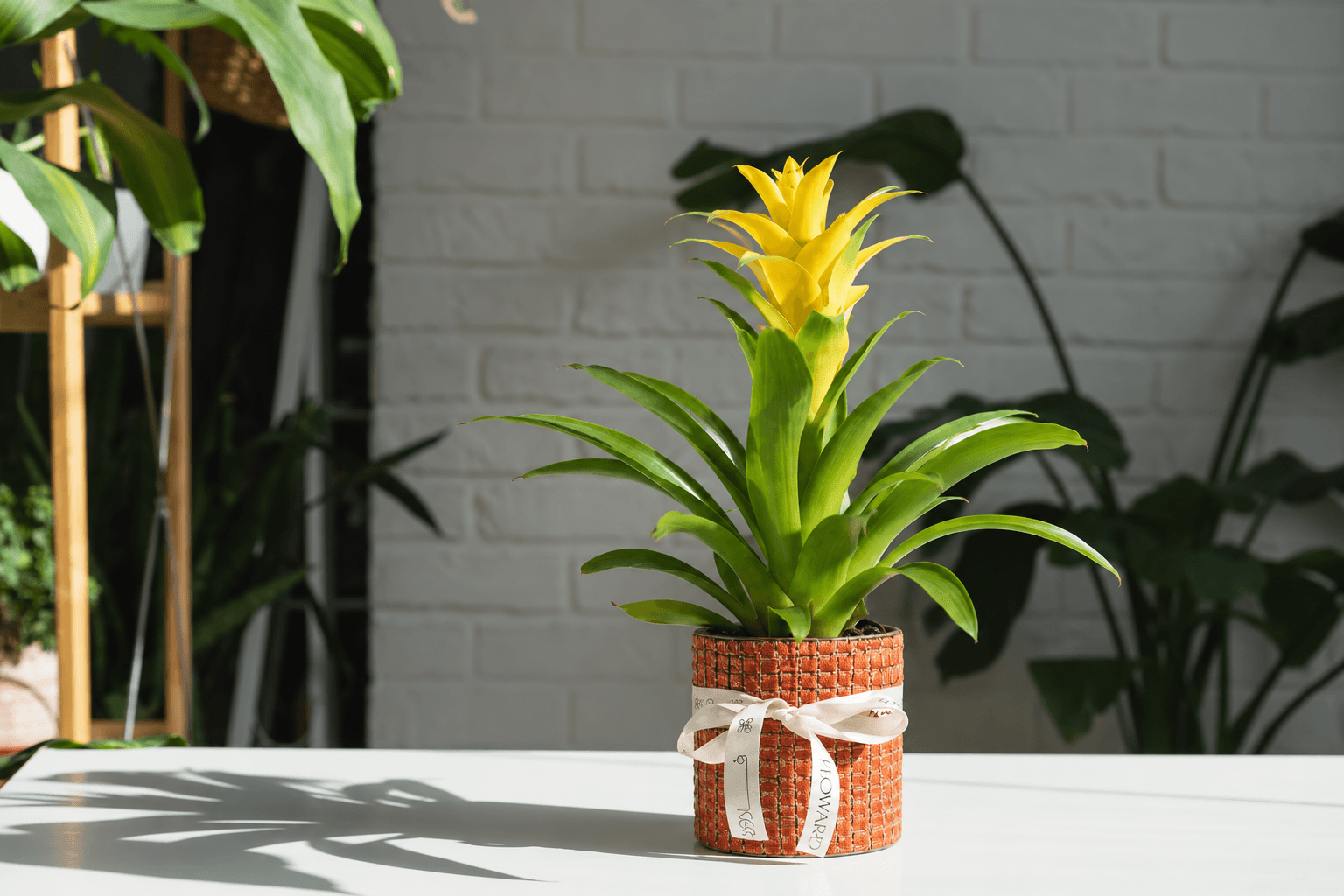
The colorful center commonly described as a Guzmania flower is mainly a cluster of modified leaves called bracts. The true flowers are much smaller and appear between these brightly colored structures. Although the flowers themselves are usually short-lived, the surrounding bracts can retain their color for approximately two to four months under suitable conditions. This long display is one reason Guzmania is valued among decorative indoor plants.
Once the colorful bracts begin to fade, restoring their original color is not possible. Fading after several months is a natural part of the plant’s lifecycle rather than a sign that it requires more fertilizer. However, very early fading may indicate that the plant is receiving insufficient light. Moving it to a brighter position with filtered light may help preserve the remaining color.
What Does the Guzmania Plant Symbolize?
The bright colors of the Guzmania plant are often associated with joy, confidence, warmth, and positive energy. Its striking center stands out against the green foliage, making it a fitting symbol of individuality and cheerful self-expression. Because the plant can grow above the ground with only limited resources, it may also represent adaptability and resilience.
Guzmania also carries a meaningful story of renewal. Each mature plant produces its colorful display only once, then gradually directs its energy toward developing young plants around its base. This natural transition can symbolize continuity, fresh beginnings, and the way life moves from one generation to the next. That symbolism gives the plant emotional value when it is chosen for a new home, personal milestone, or uplifting gift.
Elegant Home Décor Gifts

SAR 1,690
Dr. Vranjes Firenze Ginger Lime Pearl Candle | 3000g
SAR 2,495
Rogaska Wide Opening Atrium Vase
SAR 805
Abdul Samad Al Qurashi Perfumed Incense Agarwood
SAR 560
Acqua Dell'Elba Fragrance Diffuser Duo: Mare and Cala Del Fico
SAR 390
Saudi Artisanal Company Taif Fashion Candle
SAR 239
24Bottles Clima Ice White Bottle | 850ml
SAR 440
Almabakhir Bukhoor Burner Astela Set
SAR 495
Nachtmann Bossa Nova Vase
SAR 748
Wrth Morgana Box
SAR 328
Jo Malone Wood Sage & Sea Salt Scented Candle | 200g
What Are the Benefits of Growing Guzmania Indoors?
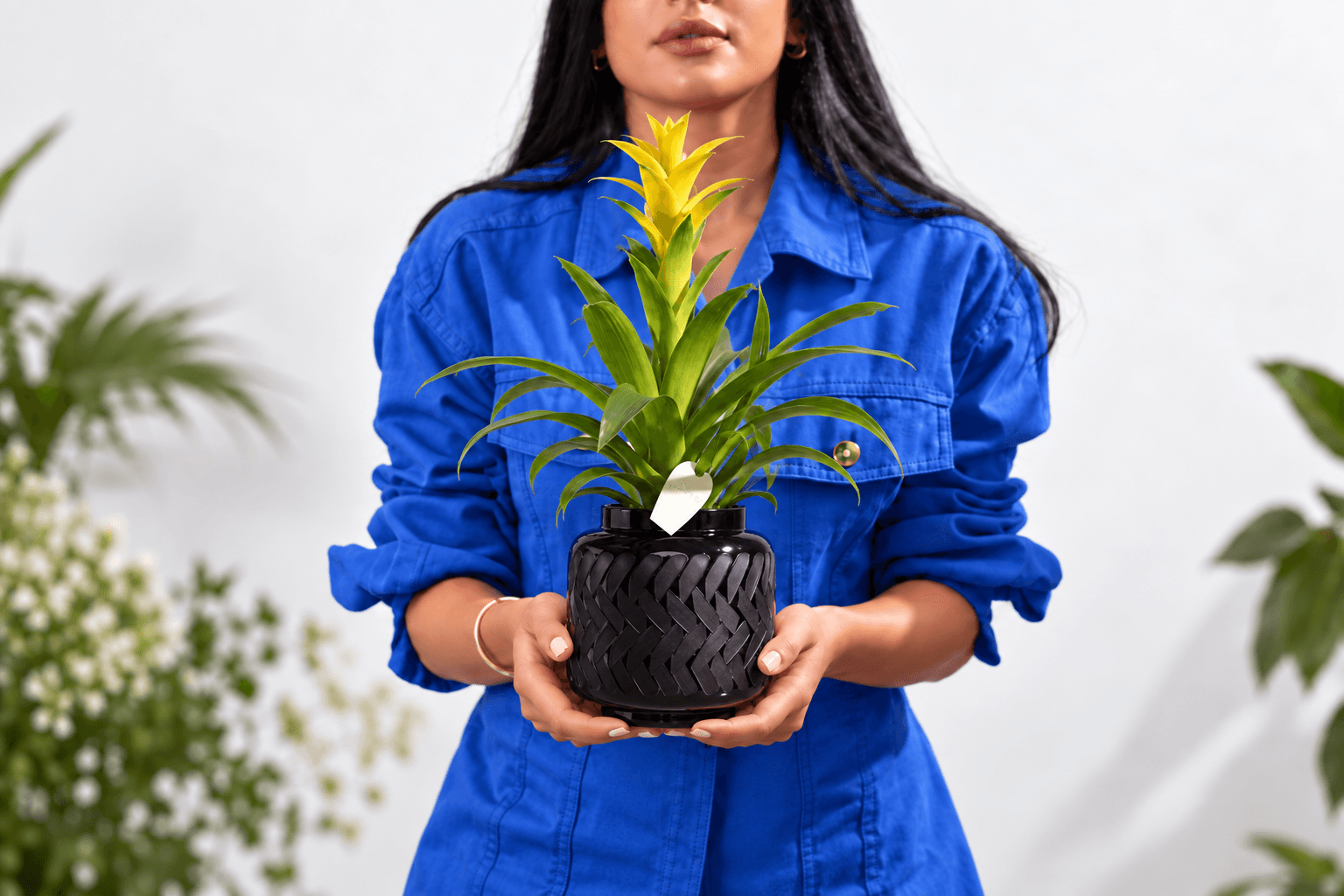
A Guzmania plant gives you lasting tropical color without occupying much space or requiring complicated pruning. Its combination of beauty, compact growth, and relatively simple upkeep offers several practical benefits indoors:
- Long-lasting color: The bright bracts can remain attractive for several months, giving your room a floral focal point long after the small true flowers have faded.
- Compact size: Its tidy, upright shape works well on desks, shelves, side tables, and other surfaces where a large houseplant would feel overwhelming.
- Decorative versatility: Red, orange, pink, and yellow varieties can enliven neutral interiors while complementing warm, natural, or contemporary décor.
- Limited maintenance: Guzmania does not need frequent repotting or regular pruning, making its routine manageable once you learn how to water it correctly.
- Pet-friendly choice: Guzmania lingulata minor is classified by the ASPCA as a non-toxic plant to cats and dogs, although chewing any plant may still cause mild stomach discomfort.
Does Guzmania Purify Indoor Air?
A Guzmania plant may make your room feel fresher and more connected to nature, but it should not be treated as an indoor air purifier. Research conducted under controlled laboratory conditions does not prove that one houseplant can remove significant amounts of pollution from an ordinary room. Ventilation, cleaning, and controlling sources of pollution have a much greater influence on indoor air quality. Guzmania’s reliable benefits are its decorative color, compact form, and the pleasure of caring for a living plant.
How Do You Care for a Guzmania Plant Indoors?
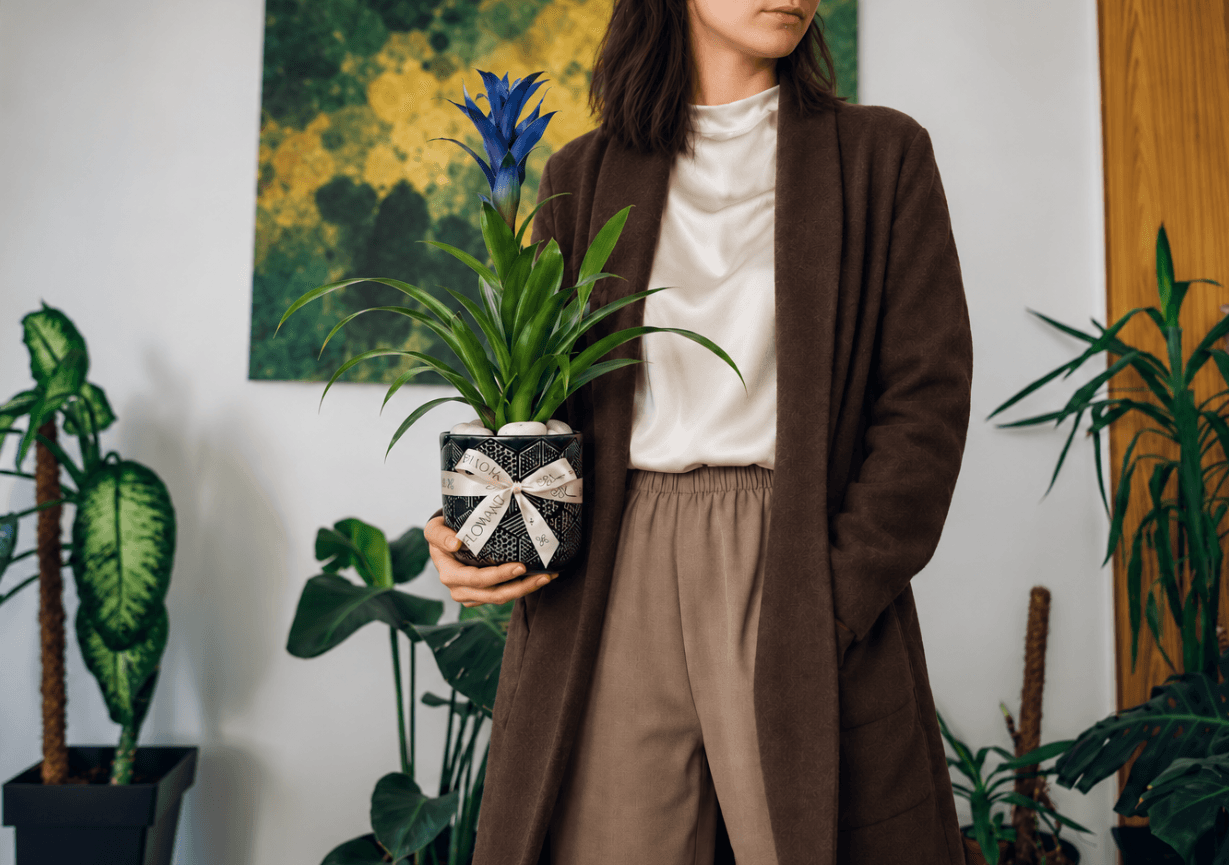
Successful Guzmania plant care begins with recreating some of the warmth and filtered light of its tropical habitat. Place it in bright, indirect light, protect it from cold drafts, and avoid soaking its roots. You will also need to refresh the water held in its central cup regularly. Once this unusual watering method becomes familiar, caring for the plant is straightforward.
Provide Bright, Indirect Light
Position your Guzmania plant near a window that receives plenty of filtered light. Strong midday or afternoon sun can pass through the glass and burn its leaves, particularly in regions with intense sunlight. A sheer curtain can soften the light without making the room too dark. Insufficient light may slow growth and cause the colorful center to lose its brightness sooner.
Water the Central Cup Correctly
The bases of the leaves form a natural cup at the center of the Guzmania plant. Keep a small amount of clean water in this cup, but empty and refresh it regularly so that the water does not become stagnant. Filtered water or rainwater can help prevent the white mineral deposits sometimes left by hard tap water. Water the potting mixture lightly and allow the upper layer to begin drying before watering again.
Protect the Roots from Excess Water
Guzmania roots need air and can rot when they remain in dense, saturated soil. Choose a loose bromeliad or orchid-style mixture containing materials such as fine bark, perlite, and coconut coir. The container must have drainage holes, and water should never collect inside a decorative outer pot. A relatively small container is usually sufficient because the roots mainly support and anchor the plant.
Maintain Warmth and Humidity
Warm, stable indoor conditions suit Guzmania better than sudden changes in temperature. Keep it away from cold windows, strong air-conditioning, heating vents, and other sources of dry or fluctuating air. If the leaf tips become dry and brown, low humidity may be contributing to the problem. Grouping it with other plants or using a humidifier can provide more consistent moisture than occasional misting.
Fertilize Sparingly
The Guzmania plant grows slowly and does not need heavy feeding. During active growth, you can apply a balanced liquid houseplant fertilizer diluted well below the full strength stated on the label. Excess fertilizer may burn the foliage or leave visible salts around the leaves and growing medium. If the plant is healthy and maintaining its color, frequent feeding is unnecessary.
Clean and Trim the Plant
Dust can dull the glossy foliage, so wipe each leaf gently with a soft, damp cloth when needed. Remove yellow, damaged, or completely dead leaves using clean scissors, but avoid cutting healthy green growth. The faded flower stalk can be removed once its color has disappeared and it has begun to dry. Regular inspection will also help you notice mealybugs or scale insects before an infestation spreads.
Style Your Space with Elegant Plants
SAR 350
Yellow Orchid Plant | Ceramic PotSAR 915
Music Home 3 Classes for 45 Minutes Voucher | Elegant Spathiphyllum PlantSAR 289
Pure Areca Palm PlantSAR 265
Elegant Aglaonema Maria PlantSAR 215
Delightful Peace Lilies PlantSAR 235
Anthurium Joli | VaseSAR 575
Anthurium lilli PinkSAR 180
Scarlet Red Anthurium Aristo PlantSAR 230
Sunlit Yellow Phalaenopsis Plant with Dotted FlowersSAR 220
Striking Asplenium Antiquum Osaka Plant
Does a Guzmania Plant Die After Flowering?
Yes, the mature rosette gradually dies after completing its single flowering cycle, even when it has received excellent care. This natural behavior is known as a monocarpic life cycle and should not be mistaken for an immediate care failure. As the central display fades, small offsets usually begin appearing around the base of the parent plant. Leave the parent in place while it remains green because it continues supporting this new growth.
Common Guzmania Problems and How to Fix Them
Most Guzmania problems can be traced to unsuitable light, dry air, poor-quality water, or excess moisture around the roots. Check the affected part carefully before changing your care routine.
- Brown leaf tips: Often caused by dry air, mineral-rich tap water, or excess fertilizer. Increase humidity, switch to filtered water, and reduce feeding.
- Pale or scorched patches: Usually indicate exposure to strong direct sunlight. Move the plant to a spot with bright, filtered light.
- Yellowing lower leaves: May result from waterlogged potting mix. Allow the mix to dry slightly and ensure the container drains freely.
- Soft center or unpleasant smell: These are warning signs of crown rot caused by stagnant water or cold, wet conditions. Empty the central cup, remove damaged tissue, and improve warmth and airflow.
- Fading colorful bracts: This is normally part of the plant’s natural aging process after several months. If fading happens early, insufficient light may be the cause.
- Mealybugs or scale insects: Isolate the plant, wipe away visible pests, and inspect nearby houseplants to prevent the infestation from spreading.
Style Your Space with Elegant Plants
SAR 350
Yellow Orchid Plant | Ceramic PotSAR 915
Music Home 3 Classes for 45 Minutes Voucher | Elegant Spathiphyllum PlantSAR 289
Pure Areca Palm PlantSAR 265
Elegant Aglaonema Maria PlantSAR 215
Delightful Peace Lilies PlantSAR 235
Anthurium Joli | VaseSAR 575
Anthurium lilli PinkSAR 180
Scarlet Red Anthurium Aristo PlantSAR 230
Sunlit Yellow Phalaenopsis Plant with Dotted FlowersSAR 220
Striking Asplenium Antiquum Osaka PlantHow Do You Propagate Guzmania Pups?
Allow the pups to remain attached until they have developed several leaves and reached approximately one-third to one-half the size of the parent plant. Larger offsets have a better chance of establishing successfully because they have stored more energy and may already have their own roots. Gently remove the plant from its pot and separate the pup using a clean, sharp knife, retaining any attached roots. Avoid pulling it away forcefully, as this may damage both the offset and the parent.
Plant the separated pup in a small container filled with a loose bromeliad or orchid mixture. Keep it warm and provide bright, indirect light while it establishes, watering the growing medium lightly rather than saturating it. Young Guzmania plants grow slowly and may need several years before producing their first colorful display. This process allows the Guzmania plant’s lifecycle to continue even after the original rosette has faded.
Is Guzmania a Good Indoor Plant for Beginners?
Guzmania is a good indoor plant choice for an enthusiastic beginner who is willing to learn a slightly different watering routine. It requires little pruning, grows comfortably in a small pot, and does not need frequent fertilizing or repotting. Its main sensitivities are waterlogged soil, stagnant water, direct sunlight, and cold air from air-conditioning. When you provide filtered light, warmth, and proper drainage, Guzmania plant care becomes easy to manage.
A Guzmania plant rewards simple, thoughtful care with months of vivid color and beautiful sculptural foliage. Its cheerful appearance and symbolism of renewal also make it a natural choice among elegant gifts for plant lovers and new gardeners alike.